MobiL Sesli chat

Data Protection Compliance The Way Big Bass Bonanza Slot Protects UK Data - MOBiLGiT.Net,Sesli Mobil Chat,Kamerali Mobil Sohbet,MobilChat

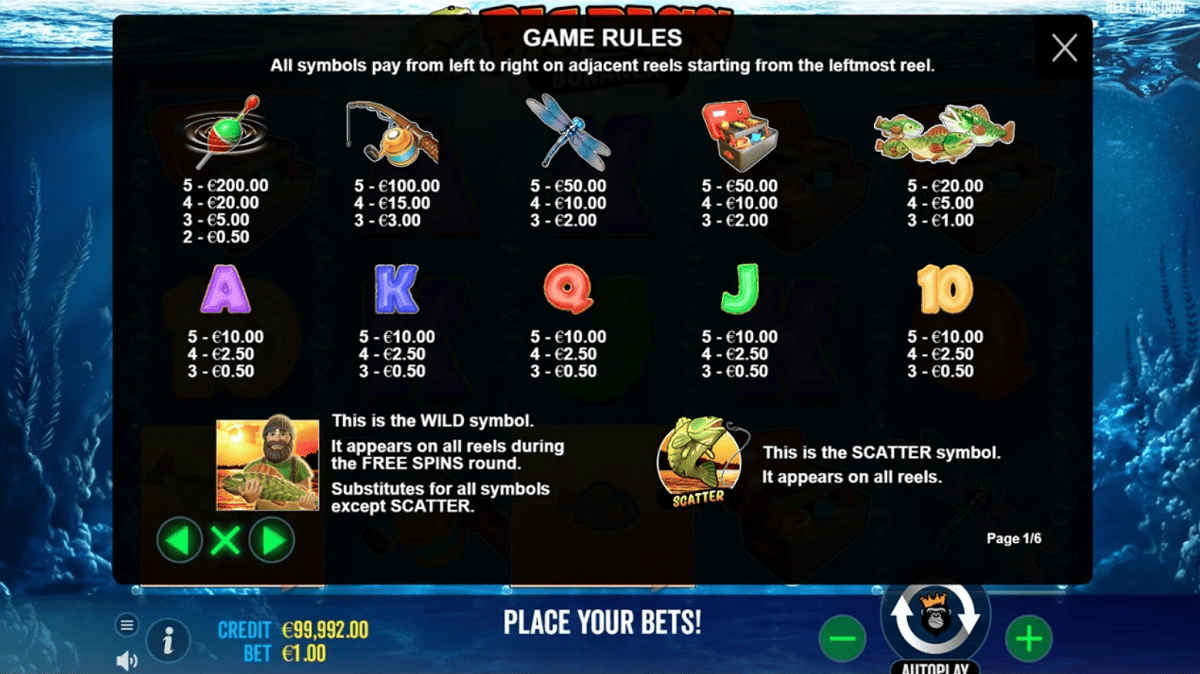
As an analytical reviewer, I have dedicated considerable time analyzing the nuanced relationship between online gaming platforms and data protection regulations. In the scope of the United Kingdom, the General Data Protection Regulation (UK GDPR) remains a cornerstone of digital privacy, enforcing stringent obligations on any service handling personal data. Today, I will explore how Pragmatic Play’s popular title, Slot Big Bass Bonanza, and the platforms that host it, such as Megaways Slots, tackle the critical task of protecting player information. My focus is not on the game’s fishing mechanics or payout potential, but rather on the frequently ignored framework of security and compliance that operates beneath the surface. I find that comprehending this framework is crucial for any player looking for a secure and trustworthy gaming experience.
The cornerstone of UK GDPR in Digital Casinos
The UK GDPR, derived from its EU predecessor, creates a solid system of rules for data protection. For an online slot game like Big Bass Bonanza, compliance is a must, not a choice but a core need for any authorized operator offering services to UK players. The regulation imposes principles such as legality, equity, transparency, purpose limitation, data minimization, precision, storage limitation, wholeness, and responsibility. In real-world scenarios, this means that from the instant a player comes to a casino site to play Big Bass Bonanza, the operator must have a valid reason for collecting data, explicitly state how that data will be used, obtain only what is necessary, protect it, and enable the player control over their information. I see this as the bedrock upon which player trust is built, converting data protection from a legal formality into a key element of service quality.
To comprehend this foundation fully, examine the principle of lawfulness. For a casino, the most common lawful bases for processing player data are necessity of the contract and justified interest. When you register to play Big Bass Bonanza, the handling of your payment details is required to fulfill the contract of providing gaming services. At the same time, using your IP address for protection and fraud prevention often comes under legitimate interest. However, I must stress that operators cannot base actions on legitimate interest where it overrules your fundamental rights, a equilibrium that requires meticulous assessment. This legal foundation is not abstract; it shapes the clauses you agree to in terms and conditions and governs how platforms can design their data workflows from the beginning.
Data Gathering Extent for Big Bass Bonanza Users
When you interact with Big Bass Bonanza at a authorized online casino, the scope of data collection is specifically limited and carefully bounded. Commonly, this includes account registration details like your name, email address, date of birth, and payment information for transactions. Additionally, technical data such as IP address, device identifiers, browser type, and gameplay patterns are recorded automatically. It is important to note that the game provider, Pragmatic Play, and the hosting platform do not demand nor should they process unnecessary personal data irrelevant to the service provision. I always review privacy policies to ensure that the data collected is strictly for purposes of account management, transaction processing, fraud prevention, regulatory compliance, and game functionality improvement. This concept of data minimization is a key indicator of a compliant and trustworthy operator.
Let me provide a concrete instance of data minimization in action. A platform does not have to know your occupation or marital status to let you spin the reels of Big Bass Bonanza. If such boxes are present in a registration form, I right away doubt their need. In the same way, while gameplay data like bet size, session length, and feature triggers are recorded, they should be made anonymous for analytical use whenever feasible. This particular data helps developers like Pragmatic Play comprehend that players might, for illustration, appreciate the free spins feature in Big Bass Bonanza more during evening sessions, which can guide general game design without tying back to you as an person. The line is established at collecting data that could lead to profiling for manipulative purposes, such as prompting further play during losing streaks, which would breach fairness principles.
The way Player Data is Employed and Managed
The utilization of player data complies with the particular purposes described at the point of collection. For a Big Bass Bonanza session, your data enables the core gaming experience: checking your age and identity, processing deposits and withdrawals, ensuring the game runs without issues on your device, and delivering customer support when needed. Furthermore, operators may use aggregated and aggregated data for analytical purposes to comprehend broader trends in game popularity or feature engagement, which can shape game development. Importantly, I look for unambiguous assurances that personal data is not used for intrusive profiling or decision-making that materially affects the player without a lawful basis. The processing must remain within the boundaries of the original, transparently stated intentions, a pillar that distinguishes reputable platforms from less scrupulous ones.
Processing reaches into areas players may not immediately think about, such as responsible gambling safeguards. Here, your gameplay data is processed in real-time to identify patterns suggestive of problematic behavior, triggering mandatory breaks or account reviews. This is a critical and lawful use of data that shields the player. Conversely, a worrying use would be leveraging your data to build a psychological profile to increase in-game spending through targeted, personalized bonuses that take advantage of your playing habits. I examine privacy policies for language that explicitly rules out such exploitative processing. Additionally, data is processed for regulatory reporting to bodies like the UK Gambling Commission, where details of transactions and winnings are logged to secure tax compliance and prevent money laundering, a non-negotiable aspect of operating in the UK market.
Protective Protocols Safeguarding Your Information
Strong technical and organizational security measures create the defensive perimeter around player data. Respected casinos featuring Big Bass Bonanza employ industry-standard encryption, specifically Transport Layer Security (TLS) protocols, which encode data in transit between your device and their servers, making it unreadable to interceptors. Additionally, data at rest gets protected using advanced encryption standards. Beyond encryption, I would expect to see measures like regular security audits, penetration testing, strict access controls that limit employee viewing to data on a necessary basis, and strong network security solutions. These multilayered defenses are intended to prevent unauthorized access, alteration, disclosure, or destruction of personal data, thereby maintaining the UK GDPR’s integrity and confidentiality principle.
Delving deeper, the principle of integrity demands that data is accurate and remains unaltered. This is where technologies like hash functions and digital signatures come into play, ensuring that your account balance or personal details cannot be tampered with. From an organizational standpoint, security is also about people and processes. Employees receive rigorous data protection training, and access logs are carefully kept to create an audit trail. For instance, a customer support agent assisting you with a Big Bass Bonanza bonus issue sees only the specific data needed to resolve your query, and that access is documented. Furthermore, physical security of data centers, including biometric access and 24/7 surveillance, forms part of this comprehensive shield. It is this mix of cutting-edge technology and stringent internal policies that establishes a resilient security posture able to defending against evolving cyber threats.
Grasping Your Information Rights Under UK GDPR
As a player, you are not a passive data subject; the UK GDPR empowers you with numerous enforceable rights. These encompass the right to view the personal data an provider holds about you, the right to rectification of inaccurate data, the right to erasure (or “to be forgotten”) under certain conditions, the right to limit processing, the right to data portability, and the right to challenge to processing. For illustration, if you think your gameplay data is being processed improperly, you have the right to contest it. I view the convenience with which a platform permits you to utilize these entitlements—often through a specific data protection officer or a clear process detailed in their privacy guidelines—as a direct measure of their commitment to standards and user-centricity.
Let’s explore the practical use of two key entitlements. The right of access, commonly exercised via a Subject Access Request (SAR), enables you to receive a version of all your data. For a Big Bass Bonanza enthusiast, this could reveal not just your account particulars, but a log of every game session, payment, and customer service interaction. A adhering operator must provide this in a commonly employed, machine-readable structure, typically within one monthly period. The right to data portability enhances this, allowing you to take that arranged data and transfer it to another service operator. Meanwhile, the right to removal is not absolute but applies in situations where you revoke consent and no other lawful basis applies, or if the data is no longer necessary. However, legal obligations like anti-money laundering records may supersede this right, implying your transaction history must be retained for a legally prescribed period, a nuance that underscores the complex relationship between different regulatory structures.
The role of Data Protection Officers and Regulators
Accountability is a cornerstone of the UK GDPR, and a central figure in this framework is the Data Protection Officer (DPO). Bigger data processing operations, which many online gaming platforms qualify for, are mandated to appoint a DPO. This independent expert is tasked for supervising the data protection plan, securing compliance, and acting as a point of contact for both supervisory authorities and data subjects. In the UK, the relevant regulator is the Information Commissioner’s Office (ICO). The ICO has the power to probe breaches, impose fines, and offer guidance. The presence of a assigned DPO and compliance to ICO guidelines indicates to me that an operator takes its legal obligations earnestly and has embedded data protection governance.
The DPO’s role is diverse and goes beyond mere compliance checking. They are vital to promoting a culture of data protection within the organization, training staff, and performing Data Protection Impact Assessments (DPIAs) for new projects, such as integrating a new payment method or a new game feature in Big Bass Bonanza that might gather additional data. The DPO must operate independently and report immediately to the highest management level, making sure data protection considerations are not superseded by business interests. On the regulatory front, the ICO’s guidance documents on topics like direct marketing, cookies, and AI are essential reading for any operator. The ICO also holds a public register of fee payers, and while not a certainty, being on this register is another small indicator of an operator’s involvement with the formal structures of UK data protection law.
Incident Handling Guidelines and Customer Communication
Even with top-tier safeguards, no system is completely immune. The UK GDPR requires strict protocols for handling personal data breaches. In the event of a breach that is likely to result in a risk to your rights and freedoms, the operator is legally obliged to notify the ICO within 72 hours of becoming aware of it. If the risk is high, they must also inform you of the breach, the affected individual, without undue delay. This transparency is vital. As a reviewer, I assess an operator’s credibility not just by its security safeguards but also by its state of readiness and commitment to transparency in the event of a security incident. A clear, published breach response plan is a reliable sign of a mature compliance posture.
What constitutes a ‘high risk’ requiring direct player notification? This is a key distinction. A breach involving extremely confidential information like financial details or login credentials that could lead to identity theft or financial fraud would very likely meet the threshold. The notification to you must outline the nature of the breach, the likely consequences, and the measures taken or proposed to address it. Internally, a robust protocol involves prompt containment, a forensic investigation to ascertain the scope, and remediation steps to avoid repetition. For example, if a vulnerability was exploited, patches must be applied across the entire system. I also look for whether an operator has cyber-insurance, which not only helps mitigate financial fallout but often requires strict security standards to obtain. This holistic approach to incident response shows that data protection is embedded in the operational fabric.
Cross-Border Data Transfers and Worldwide Compliance
Online gaming is a worldwide industry, and the framework supporting a game like Big Bass Bonanza often extends across multiple jurisdictions. This demands the transfer of personal data outside the UK. The UK GDPR places strict conditions on such exchanges to make sure the safeguards accompanies the data. Transfers to countries considered to have appropriate data protection laws (by UK government assessment) are authorized. For transfers to other countries, operators must use safeguards such as Standard Contractual Clauses (SCCs) sanctioned by the UK government. I always examine a privacy policy for details on international transfers and the legal mechanisms utilized. This intricate aspect of compliance reflects an operator’s devotion to preserving protections even when data moves across borders.

Consider a common scenario: a UK-based player’s data might be managed by a customer support team situated in the European Union, or game server logs might be stored on cloud infrastructure in the United States. Post-Brexit, the UK has identified the EU as offering an adequate level of protection, facilitating seamless data flows. Transfers to the US, however, are more complicated and typically depend on the UK Extension to the EU-US Data Privacy Framework or the aforementioned SCCs. These are not mere paperwork; they are legally binding contracts that set GDPR-level obligations on the foreign recipient. I pay close attention to whether a privacy policy is vague on this point or explicitly names the countries and safeguards used. This transparency is crucial, as it notifies you, the player, about the international journey your data may take when you are simply looking to land the big bass catch.
Selecting a GDPR-Conforming Platform for Big Bass Bonanza
In the end, the obligation for UK GDPR compliance rests with the online casino operator you choose to play Big Bass Bonanza on. My useful advice for players is to carry out due diligence before registering. Firstly, confirm that the platform holds a valid license from the UK Gambling Commission (UKGC), as this regulator requires strict data protection standards as part of its licensing conditions. Second, review the platform’s privacy policy thoroughly; it should be comprehensive, clearly written, and specify all aspects of data handling. Thirdly, look for trust signals such as SSL/TLS encryption (indicated by the padlock icon in your browser’s address bar), clear contact information for a Data Protection Officer, and straightforward options to manage your privacy preferences within your account. By selecting a platform that clearly prioritizes these aspects, you can enjoy the thrilling reels of Big Bass Bonanza with greater assurance in the security of your personal data.
Your due diligence should include testing the mechanisms of control. Before depositing, try to locate the data preference center in your account settings. Can you easily opt out of non-essential marketing communications? Is there a simple form or email address to file a Subject Access Request? Moreover, research the operator’s history. A quick lookup for the operator’s name alongside terms like “data breach” or “ICO fine” can be revealing. While no company is perfect, a pattern of issues is a red flag. Bear in mind, the UKGC license is your strongest ally; a breach of GDPR can lead to regulatory action from both the ICO and the UKGC, which has the authority to suspend or revoke a license. Therefore, a platform that invests in robust data protection is also committing to its very right to operate, linking its business survival with the security of your information.
Yazar: administrator_0424ea
Görüntüleme: 5 defa
Kategori: Uncategorized
Yayınlanma Tarihi: 16 Temmuz 2026
- Bedava Mobilchat siteleri
- casino
- Kamerali Mobil bayanlarla Chat
- Kamerali Sesli Mobil Chat
- Kameralı Mobil Chat odalari
- Mobil kamerali chat
- Mobil kamerali chat sitesi
- Mobil kamerali kizlarla Sohbet
- Mobil Kameralı Chat siteleri
- MobilChat
- Parasiz Mobil Sesli chat siteleri
- Parasız Mobil Sesli Sohbet Odaları
- Rastgele görüntülü Mobil Sesli sohbet
- Sesli mobil chat
- Sesli Mobil chat sitesi
- Uncategorized
- Yeni Mobil sohbet siteleri